MSC THERAPY FOR
NEUROLOGICAL & DEVELOPMENTAL CONDITIONS
Neurological & developmental conditions where MSC therapy has been studied or explored as supportive care at KSAA STEMCARE
Autism spectrum disorder
Traumatic brain injury
Spinal cord injury
Developmental delay
Hypoxic-ischemic brain injury
Cerebral palsy
Post-stroke recovery
Neuroinflammatory conditions
Neurodegenerative conditions
Cognitive and motor function impairment
How does MSC therapy aid in Neurological & Developmental Conditions
Stem cell therapy for neurological and developmental conditions aims to repair and regenerate damaged nervous system tissue rather than just treat symptoms. Stem cells can become neurons and support cells, release neuroprotective and anti-inflammatory factors, and create a more supportive environment for neural repair and functional recovery.
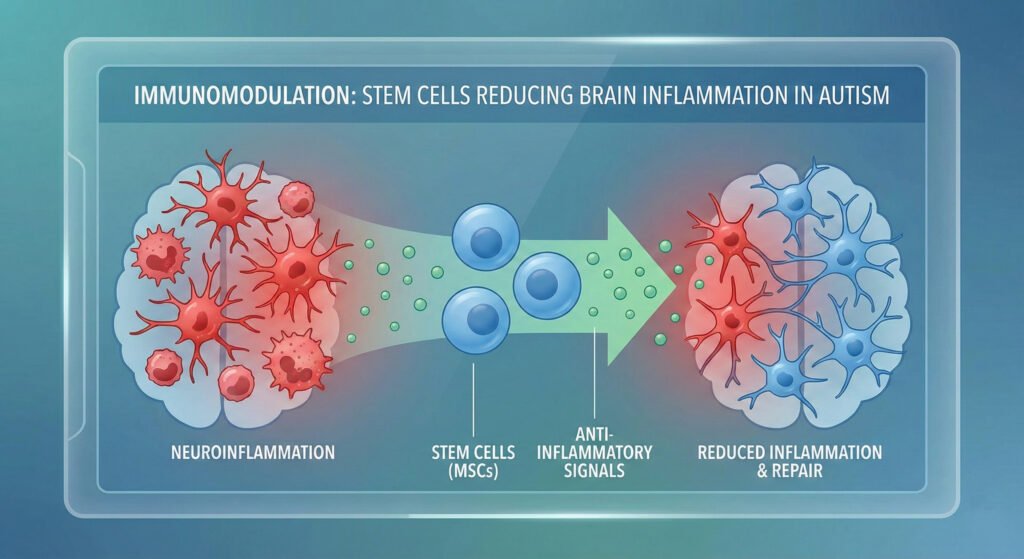
1. Immunomodulation (Reducing Inflammation)
a. The Issue: Many individuals with ASD have chronic neuroinflammation (inflammation in the brain) and a dysregulated immune system.
b. The Fix Stem cells can release anti-inflammatory molecules that calm this immune response. They can essentially “switch” the immune system from attack mode to repair mode, potentially reducing the biological stress on the brain.
Stem cells may help calm overactive immune responses, supporting reduced inflammation and a healthier immune balance in the body.
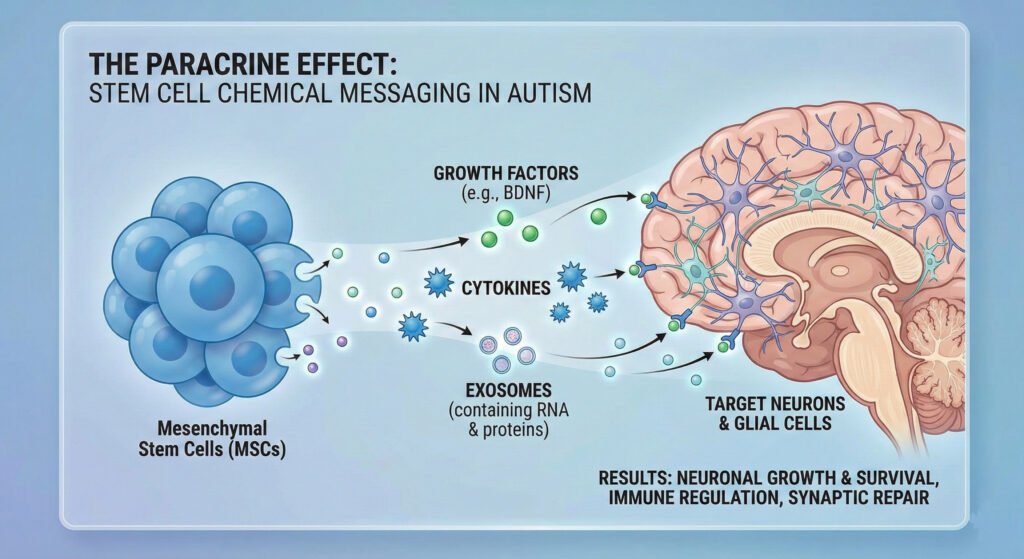
2. The Paracrine Effect (Chemical Messaging)
a. Growth Factors: Such as BDNF (Brain-Derived Neurotrophic Factor), which supports the survival and growth of existing neurons.
b. Cytokines: Signaling proteins that help regulate immunity and repair.
c. Exosomes: Tiny packages containing RNA and proteins that facilitate communication between cells, potentially encouraging the brain to repair its own neural connections.
Think of stem cells as temporary pharmacies. Once introduced into the body, they secrete a variety of bioactive molecules.
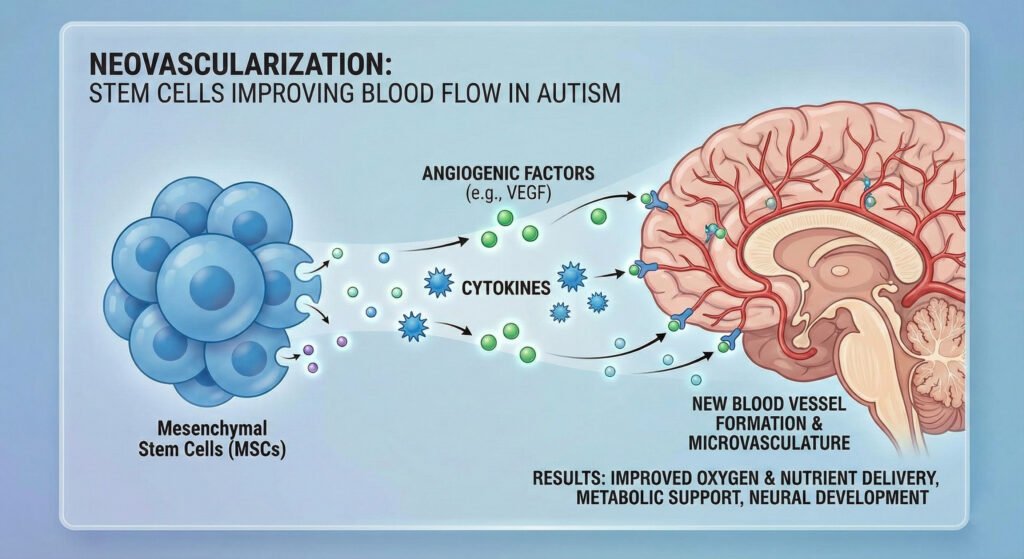
3. Neovascularization (improving Blood Flow)
The development of new and healthier blood vessels may improve microcirculation in affected tissues.
Improved blood flow helps enhance the delivery of oxygen and essential nutrients to brain cells.
Better oxygen and nutrient supply supports cellular metabolism and overall tissue health.
Improved circulation may contribute to a more supportive environment for brain function and development, especially in areas impacted by inflammation or reduced blood supply.
Some research suggests stem cells promote the formation of new blood vessels (angiogenesis). Improved blood flow means better oxygen and nutrient delivery to the brain, which is crucial for metabolic function and development.
1. Immunomodulation (Reducing Inflammation)
a. The Issue: Many individuals with ASD have chronic neuroinflammation (inflammation in the brain) and a dysregulated immune system.
b. The Fix: Stem cells can release anti-inflammatory molecules that calm this immune response. They can essentially “switch” the immune system from attack mode to repair mode, potentially reducing the biological stress on the brain.
Stem cells may help calm overactive immune responses, supporting reduced inflammation and a healthier immune balance in the body.
2. The Paracrine Effect
(Chemical Messaging)
a. Growth Factors: Such as BDNF (Brain-Derived Neurotrophic Factor), which supports the survival and growth of existing neurons.
b. Cytokines: Signaling proteins that help regulate immunity and repair.
c. Exosomes: Tiny packages containing RNA and proteins that facilitate communication between cells, potentially encouraging the brain to repair its own neural connections.
Think of stem cells as temporary pharmacies. Once introduced into the body, they secrete a variety of bioactive molecules.
3. Neovascularization
(improving Blood Flow)
The development of new and healthier blood vessels may improve microcirculation in affected tissues.
Improved blood flow helps enhance the delivery of oxygen and essential nutrients to brain cells.
Better oxygen and nutrient supply supports cellular metabolism and overall tissue health.
Improved circulation may contribute to a more supportive environment for brain function and development, especially in areas impacted by inflammation or reduced blood supply.
Some research suggests stem cells promote the formation of new blood vessels (angiogenesis). Improved blood flow means better oxygen and nutrient delivery to the brain, which is crucial for metabolic function and development.
Get a Free Consultation for MSC Treatment Now!
Consult with our experienced professionals today and take the first step toward a healthier life.