MSC THERAPY FOR
CARDIOVASCULAR CONDITIONS

Cardiovascular conditions where MSC therapy has been studied or explored as supportive care at KSAA STEMCARE

Ischemic heart disease

Myocardial infarction

Ischemic cardiomyopathy

Critical limb ischemia

Chronic inflammatory

Heart failure

Dilated cardiomyopathy

Peripheral artery disease

Atherosclerotic vascular disease

Post-cardiac injury

How does MSC therapy aid in cardiovascular conditions

Research into stem cell therapy for cardiovascular conditions is currently a very active area of medical science. The primary goal is to repair damaged heart tissue that the body cannot heal on its own. In the context of heart disease, stem cells typically work through TWO main mechanisms: paracrine signaling and direct regeneration.

1. The Paracrine Effect (Signaling & Repair)

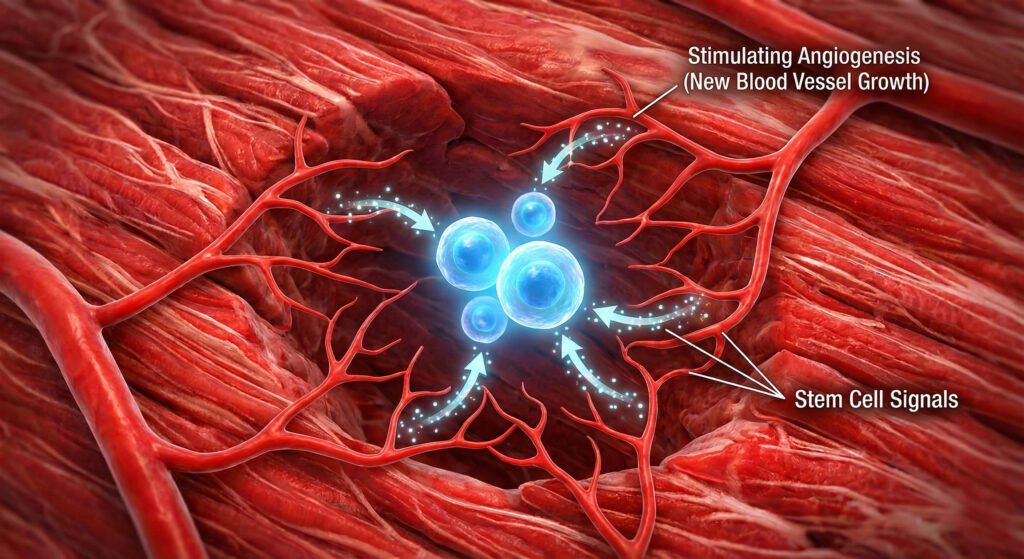
A. Stimulating Angiogenesis

They encourage the growth of new blood vessels, which improves blood flow and oxygen supply to damaged areas of the heart (revascularization). 

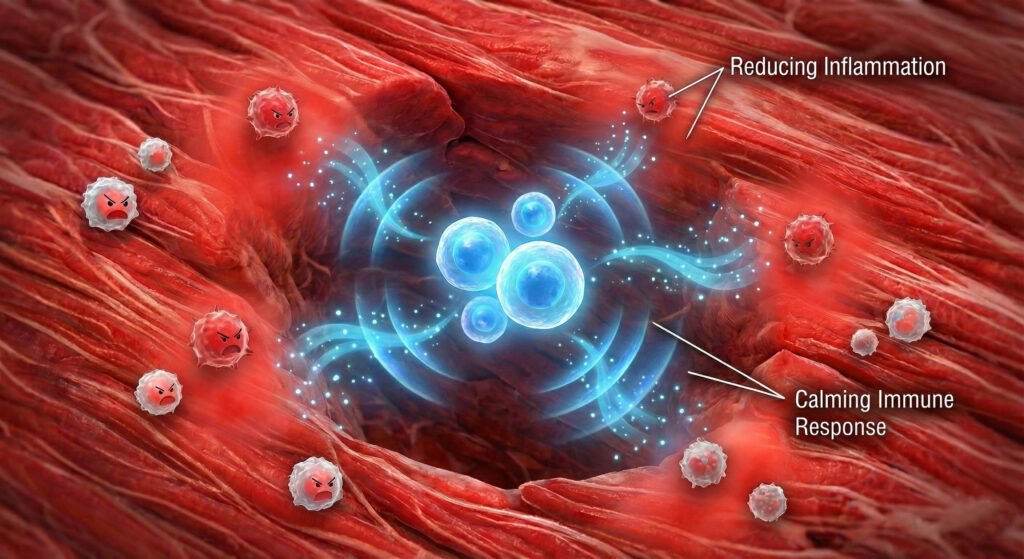
B. Reducing Inflammation

Chronic inflammation often follows a heart attack and causes further damage. Stem cells can modulate the immune system to dampen this response. 

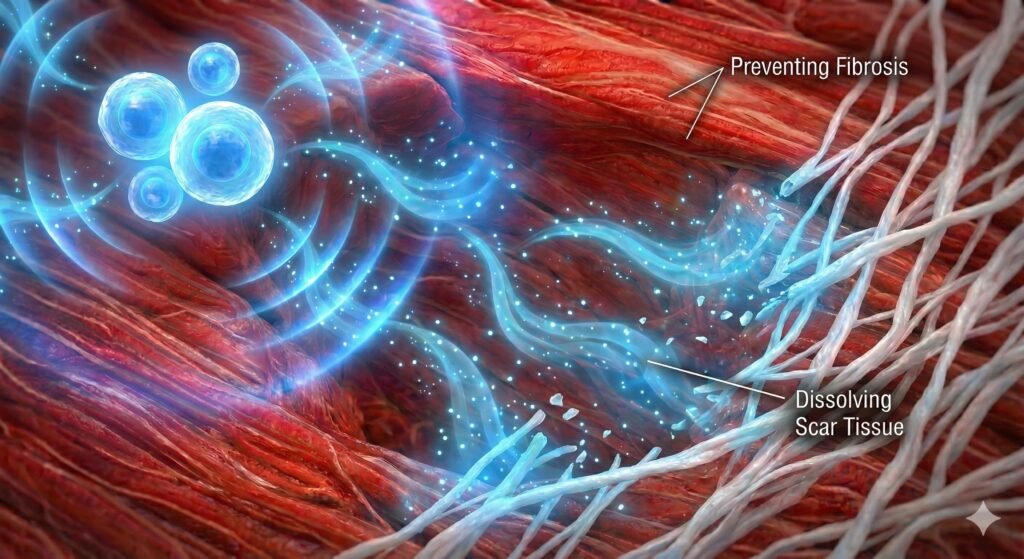
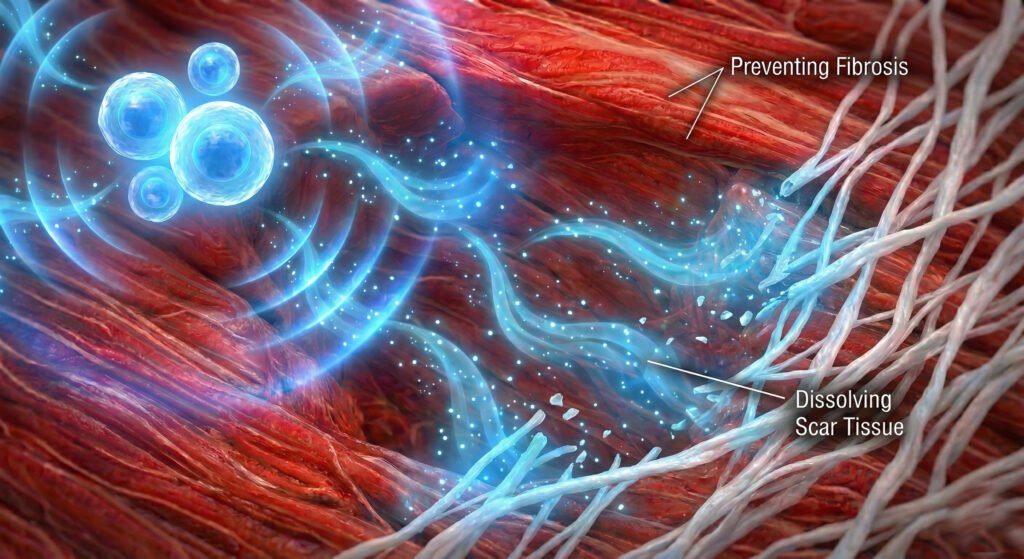
C. Preventing Scar Tissue (Fibrosis)

After a heart attack, the damaged heart muscle often heals by forming scar tissue. While this is the body’s natural repair process, too much scarring can make the heart stiff and reduce its ability to pump blood effectively. Stem cells may help by reducing excessive fibrosis and supporting healthier tissue repair, which can improve heart flexibility and overall function.
2. Direct Regeneration (Differentiation)

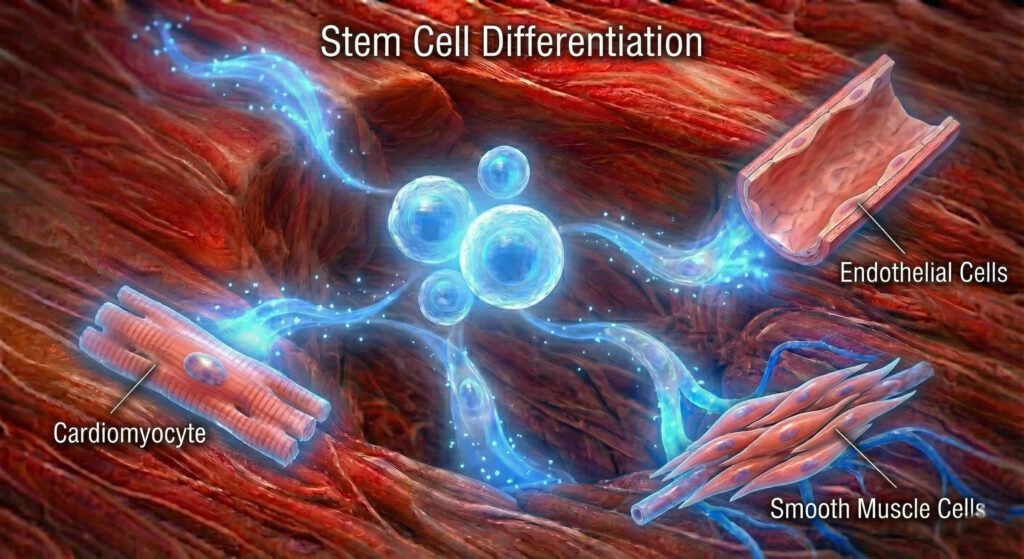
A. Differentiation

Stem cells have the potential to differentiate into cardiomyocytes (heart muscle cells), endothelial cells (blood vessel lining), or smooth muscle cells.

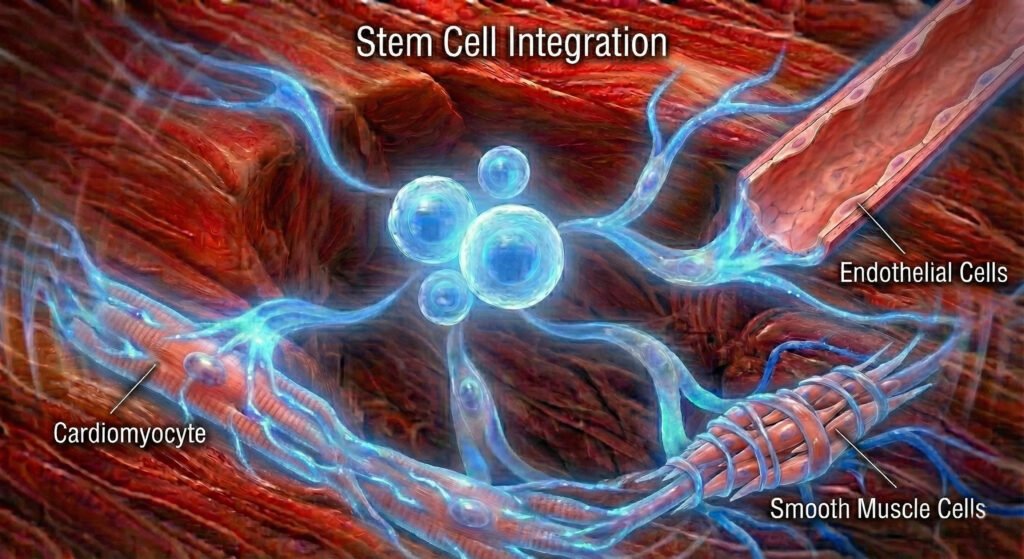
B. Integration

The goal is for these new cells to integrate into the existing heart tissue and beat in sync with the rest of the heart, replacing muscle that died during a heart attack. (This remains one of the biggest challenges in clinical trials: ensuring the new cells survive and integrate properly without causing irregular heartbeats).  

1. The Paracrine Effect (Signaling & Repair)

A. Stimulating Angiogenesis

They encourage the growth of new blood vessels, which improves blood flow and oxygen supply to damaged areas of the heart (revascularization). 

B. Reducing Inflammation

Chronic inflammation often follows a heart attack and causes further damage. Stem cells can modulate the immune system to dampen this response. 

C. Preventing Scar Tissue (Fibrosis)

After a heart attack, the damaged heart muscle often heals by forming scar tissue. While this is the body’s natural repair process, too much scarring can make the heart stiff and reduce its ability to pump blood effectively. Stem cells may help by reducing excessive fibrosis and supporting healthier tissue repair, which can improve heart flexibility and overall function.
 

2. Direct Regeneration (differentiation)

A. Differentiation

Stem cells have the potential to differentiate into cardiomyocytes (heart muscle cells), endothelial cells (blood vessel lining), or smooth muscle cells.

B. Integration

The goal is for these new cells to integrate into the existing heart tissue and beat in sync with the rest of the heart, replacing muscle that died during a heart attack. (This remains one of the biggest challenges in clinical trials: ensuring the new cells survive and integrate properly without causing irregular heartbeats).  

Get a Free Consultation for MSC Treatment Now!

Consult with our experienced professionals today and take the first step toward a healthier life.

Get a Free Consultation for MSC Treatment

Consult with our experienced professionals today and take the first step toward a healthier life.