Liver conditions where MSC therapy has been studied or explored as supportive care at KSAA STEMCARE
Chronic liver disease
Non-alcoholic fatty liver disease (NAFLD)
Non-alcoholic steatohepatitis (NASH)
Hepatitis-related liver inflammation
Liver inflammation
Liver fibrosis
Early-stage liver cirrhosis
Alcohol-related liver disease
Acute liver injury
Liver regeneration support following injury or stress
How does MSC therapy aid in Liver conditions
Stem cell therapy is being actively researched as a potential treatment for various liver conditions, particularly chronic liver disease and cirrhosis.
While the liver has a natural ability to regenerate, this ability can be overwhelmed by chronic injury (from alcohol, viruses, or fatty liver disease), leading to permanent scarring (fibrosis). Stem cells, particularly Mesenchymal Stem Cells (MSCs), are believed to help through several key mechanisms.
Here is a breakdown of how they work:
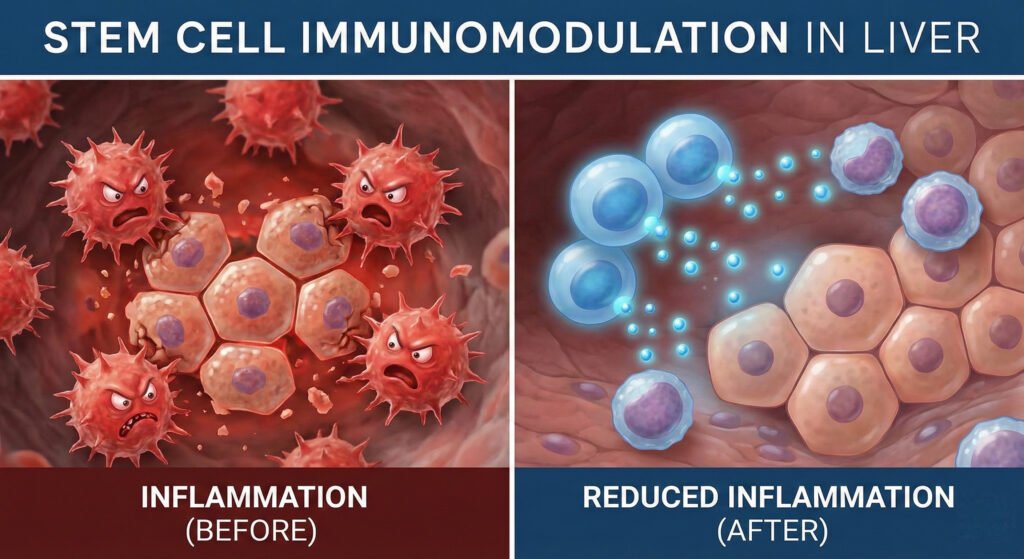
1. Reducing Inflammation (Immunomodulation)
The Mechanism: Stem cells migrate to the site of injury and release anti-inflammatory molecules (cytokines).
The Result: This helps stop ongoing damage, giving the liver a chance to stabilize and recover.
One of the primary ways stem cells help is by “calming down” the immune system. In chronic liver disease, the immune system is in a state of constant overactivity, attacking liver tissue.
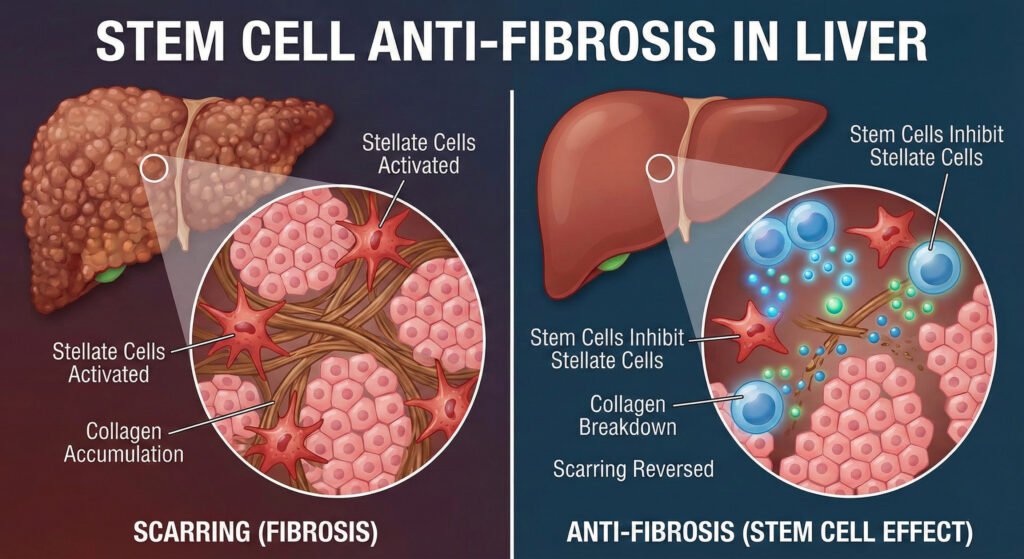
2. Preventing and Reversing Scarring (Anti-Fibrosis)
The Mechanism: Stem cells can inhibit the activation of hepatic stellate cells, which are the cells responsible for producing scar tissue. They also release enzymes (MMPs) that can help break down existing scar tissue.
The Result: This softens the liver tissue and may slow down or even partially reverse cirrhosis.
Scar tissue (fibrosis) is the main danger in liver disease because it blocks blood flow and stops the organ from functioning.
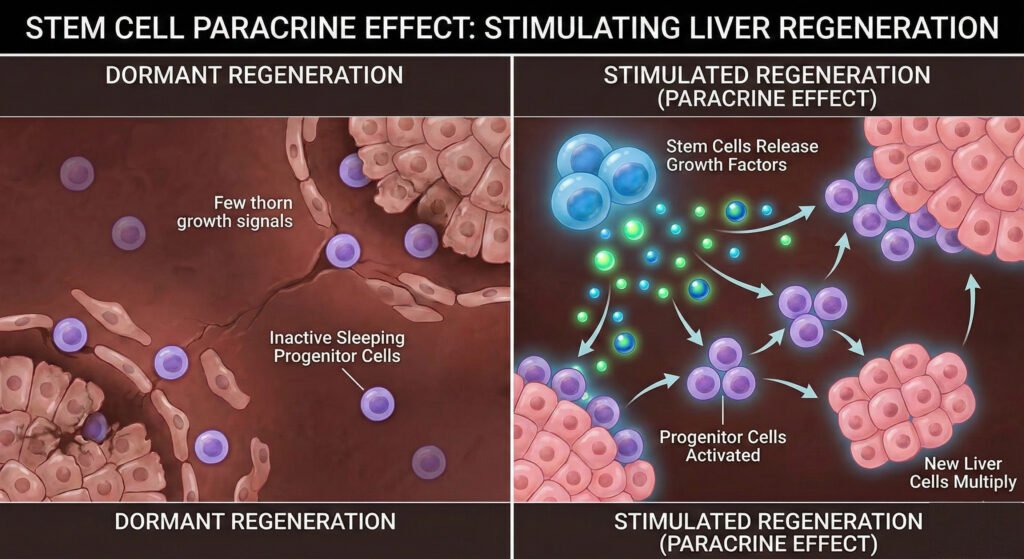
The Mechanism: They secrete growth factors (such as HGF and VEGF) and chemical signals via exosomes.
The Result: These signals wake up the liver’s native progenitor cells, boosting the organ’s natural repair process.
Rather than just turning into new liver cells themselves, stem cells act like “managers” that tell the liver's existing cells to multiply.
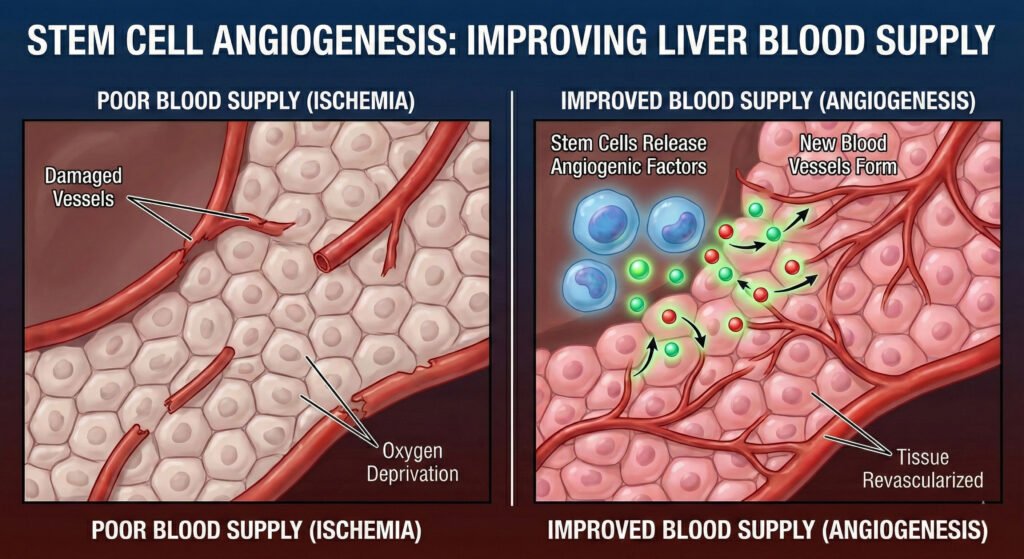
4. Improving Blood Supply (Angiogenesis)
The Mechanism: Stem cells release factors that promote the formation of new blood vessels.
The Result: This improves oxygen and nutrient delivery to the damaged tissue, further supporting cell survival and repair.
Damaged livers often have poor circulation due to scarring.
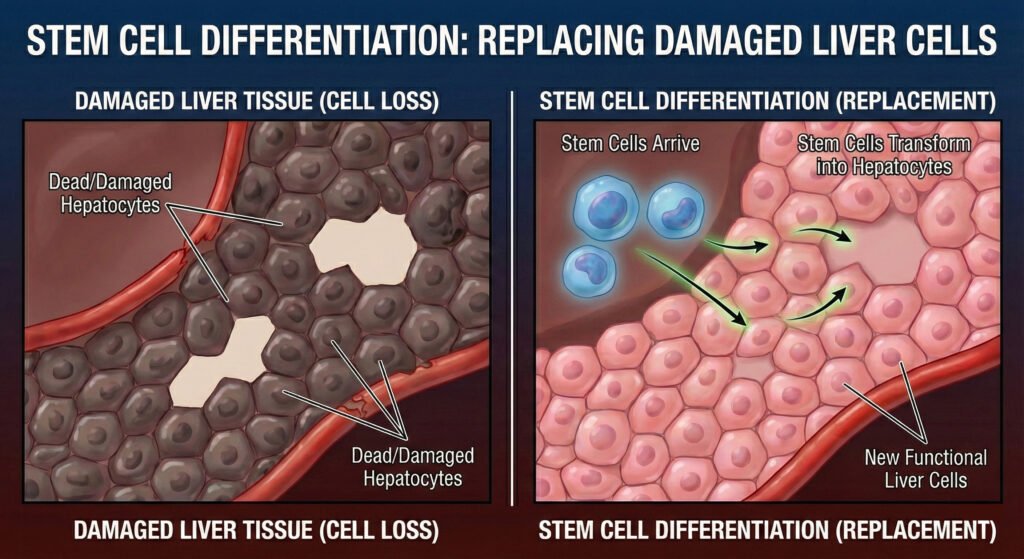
5. Differentiation (Cell Replacement)
Mechanism: Stem cells can differentiate into hepatocyte-like cells, directly transforming into liver cells.
Result: This helps replace damaged liver tissue, contributing to the repair and regeneration of the liver.
While less significant than the mechanisms above, stem cells do have the potential to differentiate (transform) directly into hepatocyte-like cells (liver cells), physically replacing some of the damaged tissue.
1. Reducing Inflammation (Immunomodulation)
The Mechanism: Stem cells migrate to the site of injury and release anti-inflammatory molecules (cytokines).
The Result: This helps stop ongoing damage, giving the liver a chance to stabilize and recover.
One of the primary ways stem cells help is by “calming down” the immune system. In chronic liver disease, the immune system is in a state of constant overactivity, attacking liver tissue.
2. Preventing and Reversing Scarring
(Anti-Fibrosis)
The Mechanism: Stem cells can inhibit the activation of hepatic stellate cells, which are the cells responsible for producing scar tissue. They also release enzymes (MMPs) that can help break down existing scar tissue.
The Result: This softens the liver tissue and may slow down or even partially reverse cirrhosis.
Scar tissue (fibrosis) is the main danger in liver disease because it blocks blood flow and stops the organ from functioning.
The Mechanism: They secrete growth factors (such as HGF and VEGF) and chemical signals via exosomes.
The Result: These signals wake up the liver’s native progenitor cells, boosting the organ’s natural repair process.
Rather than just turning into new liver cells themselves, stem cells act like “managers” that tell the liver's existing cells to multiply.
4. Improving Blood Supply (Angiogenesis)
The Mechanism: Stem cells release factors that promote the formation of new blood vessels.
The Result: This improves oxygen and nutrient delivery to the damaged tissue, further supporting cell survival and repair.
Damaged livers often have poor circulation due to scarring.
5. Differentiation (Cell Replacement)
Mechanism: Stem cells can differentiate into hepatocyte-like cells, directly transforming into liver cells.
Result: This helps replace damaged liver tissue, contributing to the repair and regeneration of the liver.
While less significant than the mechanisms above, stem cells do have the potential to differentiate (transform) directly into hepatocyte-like cells (liver cells), physically replacing some of the damaged tissue.
Get a Free Consultation for MSC Treatment Now!
Consult with our experienced professionals today and take the first step toward a healthier life.